How AI-driven econometrics optimizes your media mix planning
Analytical Alley Team
Marketing Analytics Experts
Are you still basing next year’s budget on this year’s spend plus 10%? Most B2C brands waste up to 40% of their media budget because they lack a causal link between activities and sales. AI-driven eco...
Are you still basing next year’s budget on this year’s spend plus 10%? Most B2C brands waste up to 40% of their media budget because they lack a causal link between activities and sales. AI-driven econometrics provides the clarity needed to stop guessing and start scaling.
The evolution of marketing mix modeling
Traditional marketing mix modeling (MMM) has long been the gold standard for strategic measurement. By applying statistical analysis to historical data, it isolates the incremental impact of each channel while controlling for external factors like seasonality, inflation, and competitor activity. This econometric approach distinguishes between base sales (organic growth) and incremental sales (driven by marketing), providing a high-level view of marketing spend optimization that tactical tools often miss.
However, traditional methods often suffered from manual lag and static reporting. Modern AI-driven econometrics evolves this by automating data processing and incorporating machine learning to increase precision. These models now achieve over 90% forecast accuracy. This allows executives to predict the impact of their decisions with significant confidence before a single euro is committed to a campaign.
Why B2C brands are shifting to AI-driven models
The current measurement landscape is fractured. With the deprecation of third-party cookies and strict GDPR regulations across Europe, traditional attribution is failing. Research indicates that attribution typically overstates paid search ROI by 50% to 80% because it ignores the brand equity built by upper-funnel channels. Furthermore, attribution can miss between 30% and 60% of conversions in privacy-restricted markets.
AI-driven econometrics solves these challenges through several key advantages:
Mastering the marginal ROI curve
One of the most powerful applications of AI in media strategy is the calculation of diminishing returns. Every channel has a saturation point where spending an additional euro yields less than the previous one. Instead of looking at average returns, which can be misleading, senior leaders must focus on the marginal return.
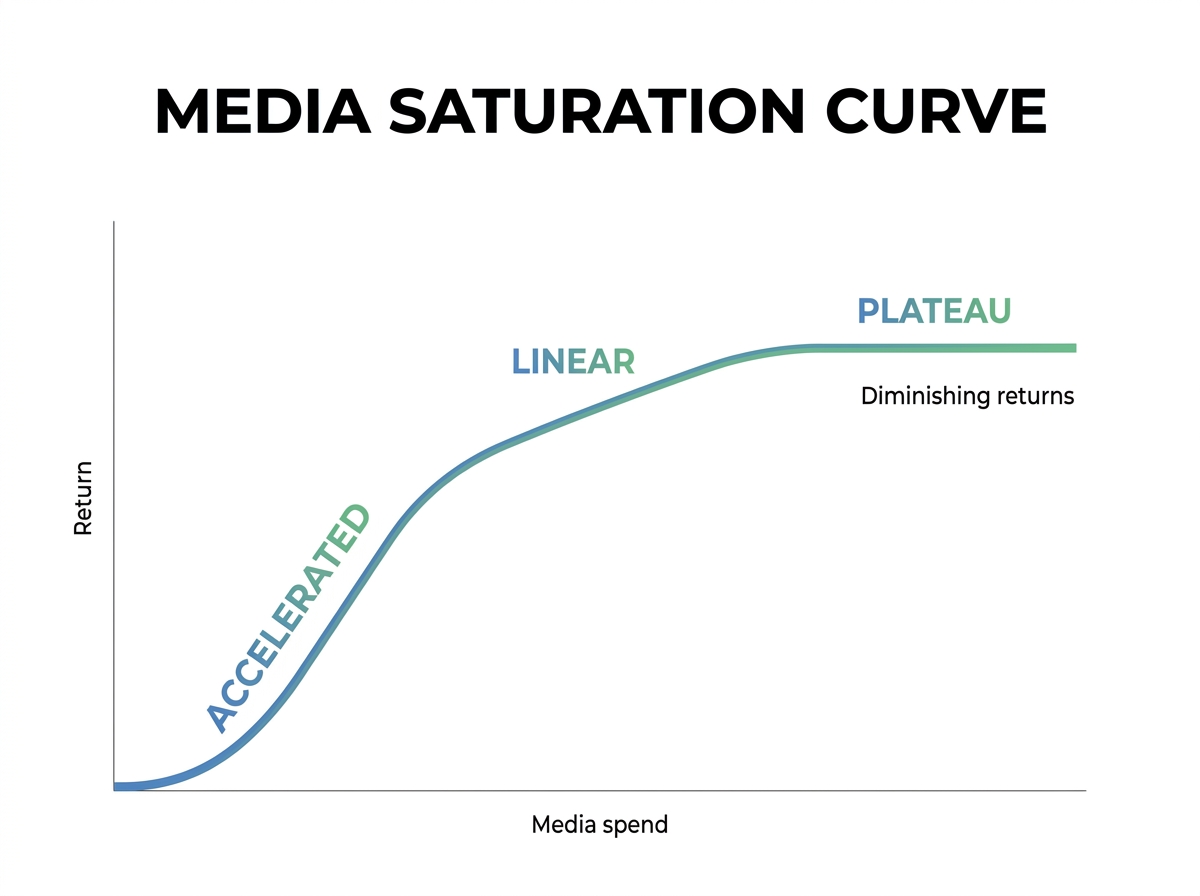
AI models use the Hill saturation function to visualize this relationship:
$$Effect = frac{Spend^alpha}{K^alpha + Spend^alpha}$$
By understanding these curves, media buyers can identify exactly when to shift budget from a saturated channel to one with higher growth potential. For example, a retail brand might find that while paid search has a high average ROI, the marginal ROI on the next €10,000 is actually higher if allocated toward display advertising effectiveness or TV. This allows for the equalization of marginal ROI across the entire mix to maximize total revenue.
Scenario planning and future-proofing
The true value for the C-suite lies in media budget scenario planning. Instead of looking backward at historical performance, AI-driven models allow you to run millions of "what-if" simulations. Modern platforms can simulate up to 500 million budget scenarios to find the optimal allocation across hundreds of combinations.
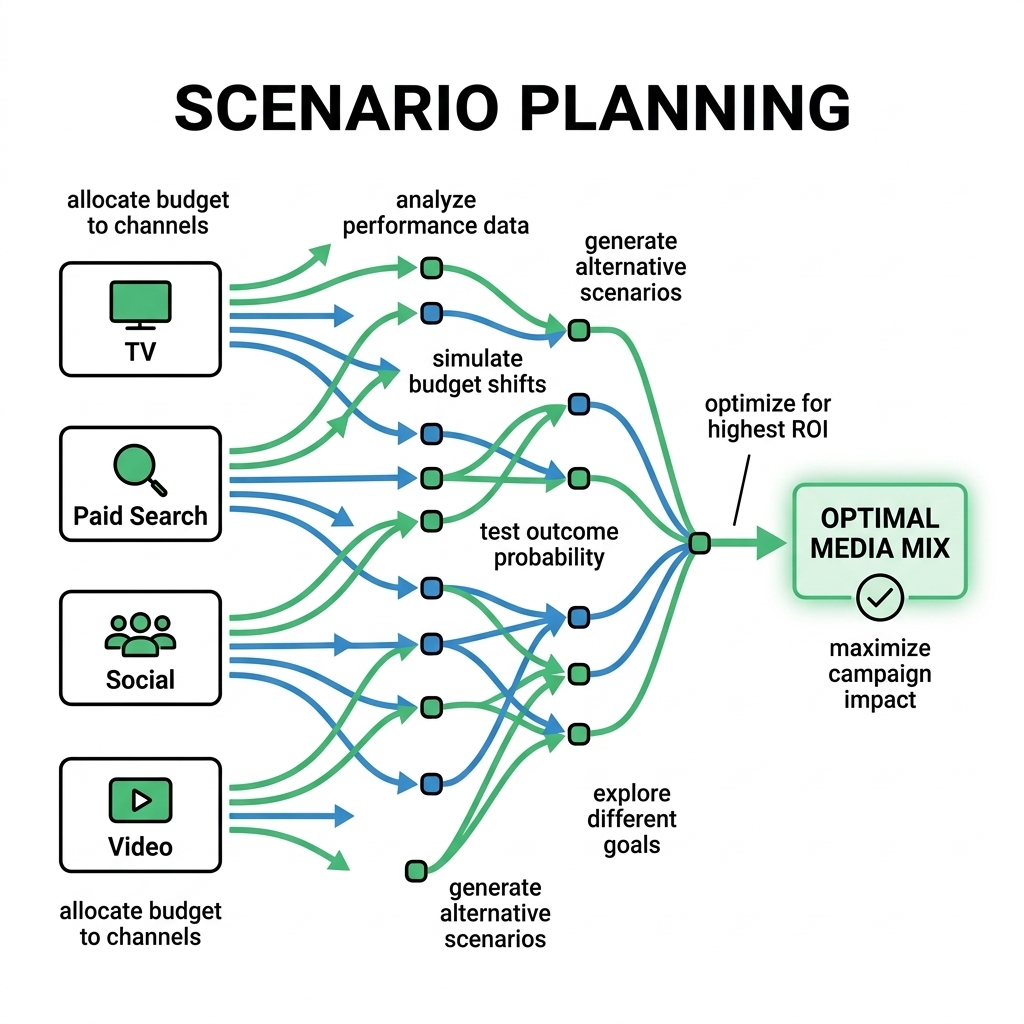
This capability helps answer strategic questions that impact the bottom line:
From insights to action
Implementing AI-driven econometrics is not a one-time project but a continuous discipline. While the initial model build typically takes four to eight weeks, quarterly refreshes ensure the model evolves with changing market conditions. The data requirements for econometrics generally involve 18 to 24 months of weekly historical data, which provides enough depth to separate organic demand from marketing-driven lift.
The results of this transition are quantifiable. Brands like Coop Pank have improved media efficiency by 38% and surpassed growth targets by 26% using these dynamic models. Similarly, companies like O2 have used econometric insights to reduce customer churn by 15% and achieve a media ROI of 3.8:1. By bridging the gap between high-level strategy and tactical execution, AI-driven econometrics ensures that every marketing decision is a calculated step toward growth.
To understand the true ROI of marketing mix modeling for your organization, you can explore our tailored solutions or book a demo to visualize your brand's specific growth potential.
Get Marketing Analytics Insights
Monthly briefings on marketing mix modeling, budget optimisation and what's actually moving the needle for European brands.