Why financial precision is reshaping B2C media buying
Analytical Alley Team
Marketing Analytics Experts
Are you certain your media budget is actually driving revenue, or are you losing around 40% of it to ad waste? In B2C marketing, measuring true incrementality is incredibly difficult, if not impossibl...
Are you certain your media budget is actually driving revenue, or are you losing around 40% of it to ad waste? In B2C marketing, measuring true incrementality is incredibly difficult, if not impossible, without absolute data transparency.
Financial precision meets B2C marketing
When business leaders search for tools to measure risk and performance, they often encounter enterprise software solutions like Transparency Analytics, Inc. Founded in 2024 in New York, the company secured funding led by Deciens Capital to deliver real-time insights, financial benchmarking, and risk measurement for private credit.
While their primary focus is corporate credit risk, their core philosophy highlights a universal truth for the C-suite: without transparent data integration, you cannot accurately measure your risk or your returns.
In B2C marketing, this exact need for clear, audit-accessible data is why modern brands are moving away from restrictive, black-box attribution models. By applying the same rigorous data principles used in financial risk benchmarking to your media investments, you can establish an airtight framework for marketing mix modeling.
The core of B2C data integration
To build an Marketing Mix Model that accurately guides your media buying, you must first break down your internal data silos. An effective analytics stack combines online and offline data points into a single, unified time-series.
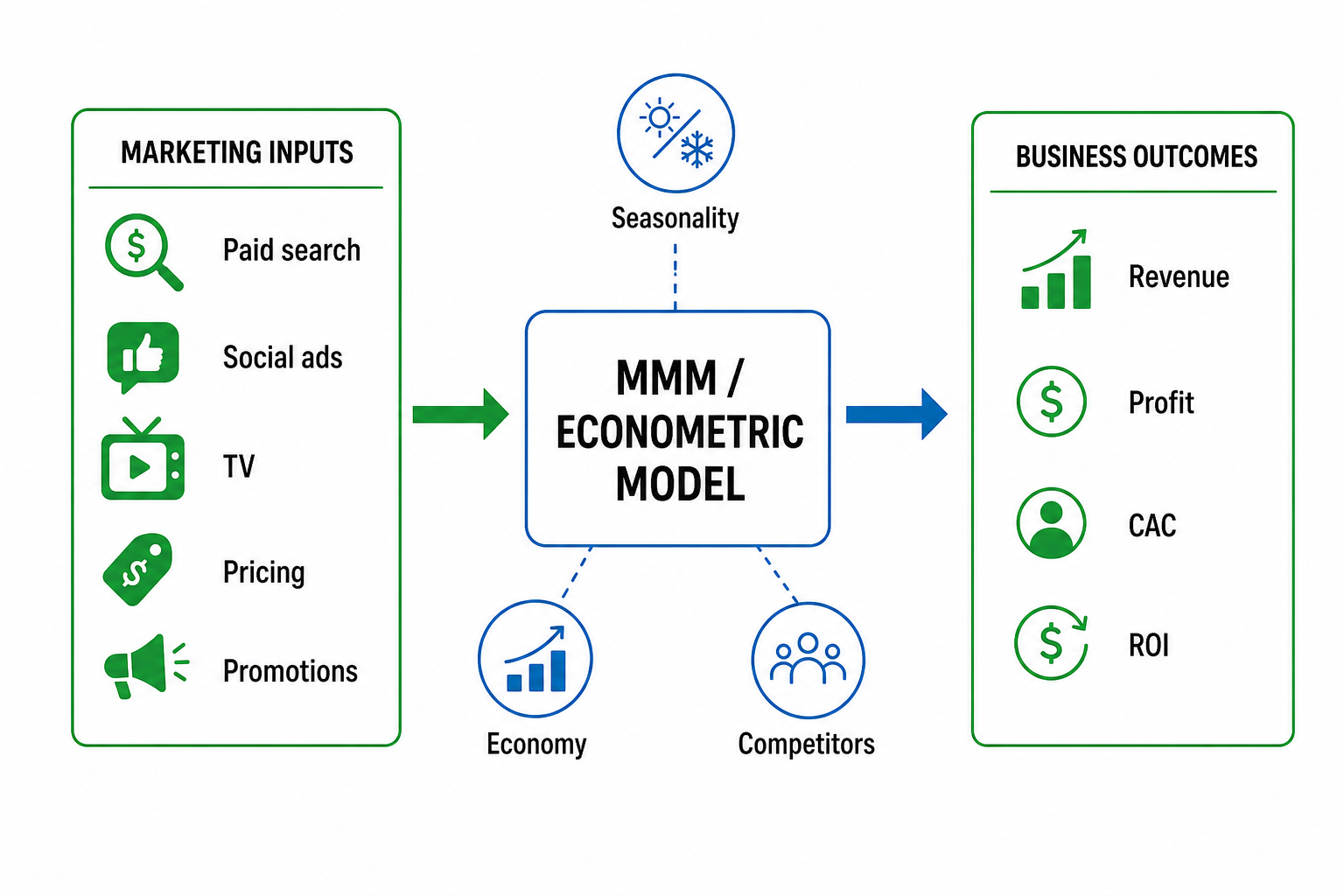
Successful B2C marketing econometrics requires clean ingestion across several key areas:
To manage this volume of information without errors, your team must establish a solid marketing data warehouse schema to automate pipeline updates. Clean data preparation is essential because it prevents common modeling challenges, such as multicollinearity, which can easily skew your actual channel returns. Understanding the exact data requirements for econometrics ensures that your model isolates the true incremental contribution of every euro spent.
Bridging the C-suite measurement gap
A frequent point of friction in European consumer brands is the alignment between the CMO and the CFO. Research shows a significant gap in how key executives view success: 70% of CEOs measure marketing performance based on year-over-year revenue growth and margin, yet only 35% of CMOs track these as top metrics.
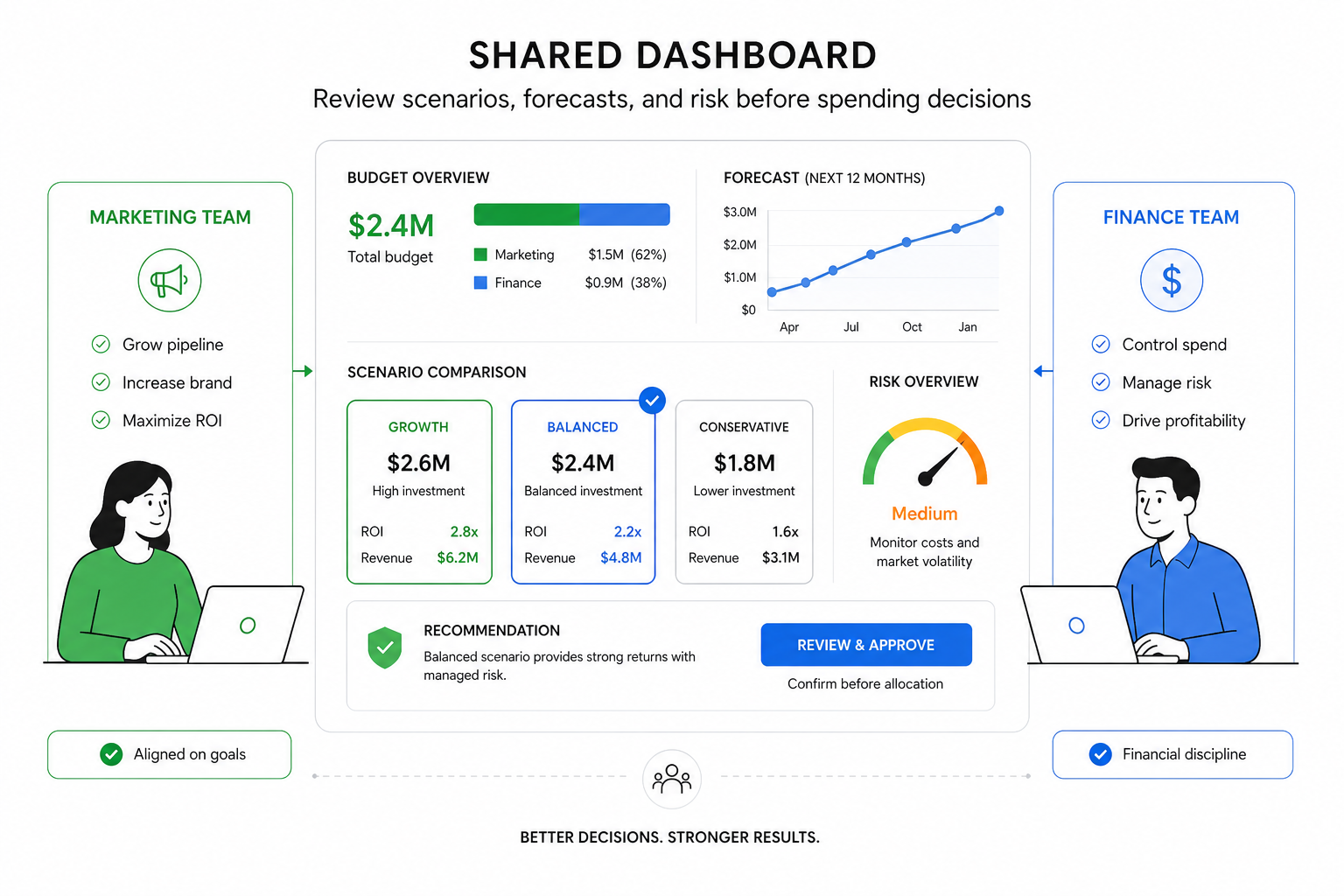
To reconnect your marketing strategy to the company's core growth engine, the CFO and CMO must align on shared performance measurements. This means translating functional marketing KPIs (like impressions or brand consideration) into concrete business outcomes (such as EBITDA or new customer margins).
By implementing executive KPI dashboards, C-suite leaders gain real-time visibility into these aligned business metrics. This unified view enables collaborative, forward-looking scenario planning instead of retroactive debates over conflicting reports.
Moving beyond the "guess-and-hope" routine
Relying solely on digital attribution platforms often paints an incomplete picture. For B2C brands with a mix of online and offline channels, a hybrid measurement strategy is the most effective path forward.
When you use a comprehensive multivariable model to analyse your marketing investments, you can accurately account for external factors like seasonal dips and promotional events. This level of mathematical transparency allows marketers and data scientists to predict marketing impacts with over 90% accuracy, providing the clear insights needed to confidently slash ad waste.
True transparency in your analytics stack is no longer optional. When you align your C-suite under verified econometric models, you gain the clarity needed to turn complex data into predictable, profitable outcomes.
Ready to eliminate guesswork and optimise your media spend? Discover how Analytical Alley combines AI computing power with human expertise to maximise your marketing ROI, or book a demo with our team today.
Get Marketing Analytics Insights
Monthly briefings on marketing mix modeling, budget optimisation and what's actually moving the needle for European brands.