How MMM decomposes business value for smarter decisions
Analytical Alley Team
Marketing Analytics Experts

Are you overestimating your marketing's impact by crediting it for sales that would have happened anyway? Marketing mix modeling (MMM) solves this by stripping away the noise to reveal the true driver...
Are you overestimating your marketing's impact by crediting it for sales that would have happened anyway? Marketing mix modeling (MMM) solves this by stripping away the noise to reveal the true drivers of your B2C revenue.
The mechanics of business value decomposition
At its core, MMM is a statistical exercise in decomposition. It takes your total business value, such as revenue or units sold, and breaks it down into two primary components: base sales and incremental sales. This distinction is critical for marketing strategists who need to prove the specific value of every euro spent.
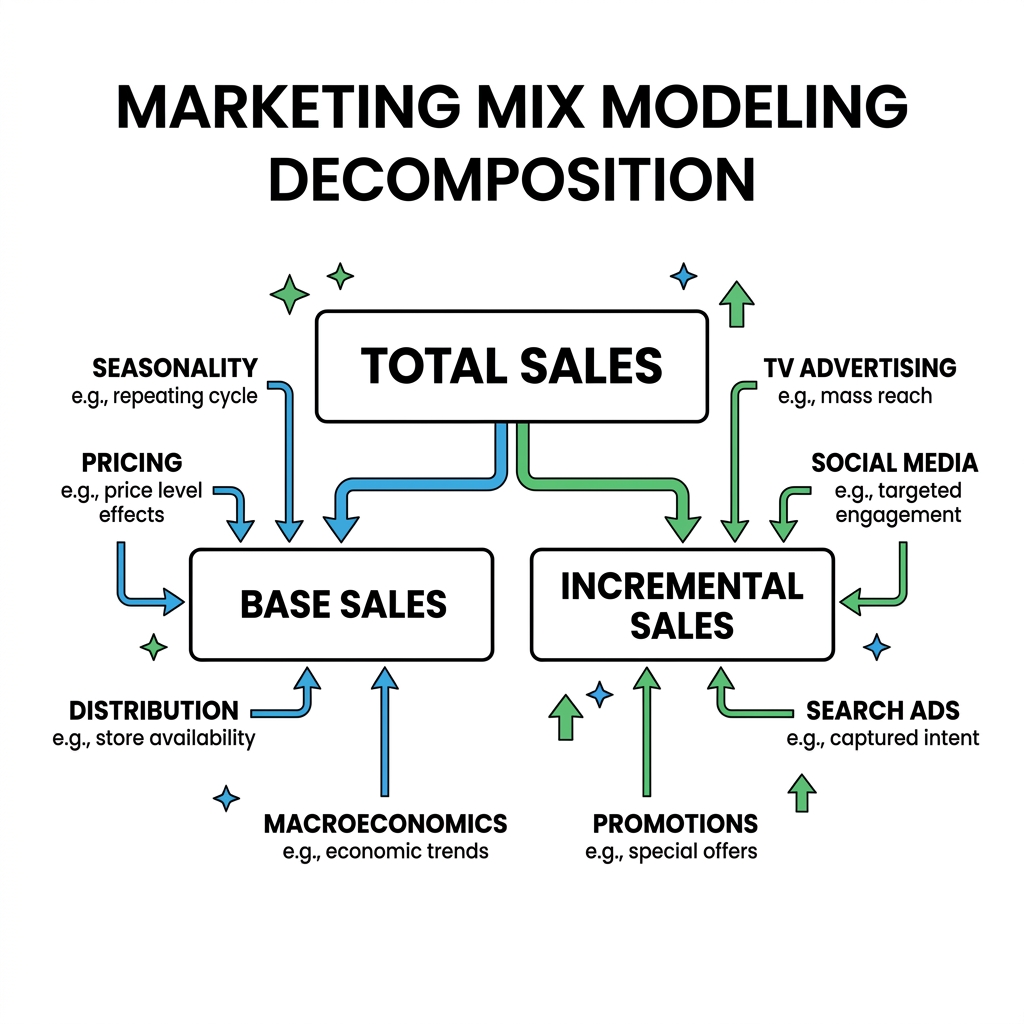
The model uses a multivariable regression equation to isolate these factors:
$Sales = text{Base} + beta_{1}(Channel_{1}) + dots + text{External Factors} + text{Error}$
In this framework, the $beta$ coefficients represent the weight or impact of each specific marketing channel. By quantifying these, you can determine exactly how much revenue a specific TV campaign or social media spend contributed versus organic demand. This econometric approach provides a level of clarity that platform-specific tools cannot match.
Defining the baseline: What happens without marketing
For most B2C brands, base vs incremental sales analysis reveals that 40% to 70% of total volume is driven by the baseline. This figure represents the sales you would expect even if you stopped all current advertising. Several factors contribute to this foundation:
Identifying this baseline accurately prevents attribution theft, which occurs when digital platforms claim credit for organic conversions that would have happened regardless of an ad view. By isolating these external factors, leadership can see the clean impact of their current investments.
Isolating incremental lift and identifying saturation
Once the baseline is established, the model isolates the incremental lift generated by media and promotions. This is where marketing effectiveness is truly measured. MMM applies two vital econometric transformations to ensure these insights are accurate and actionable.
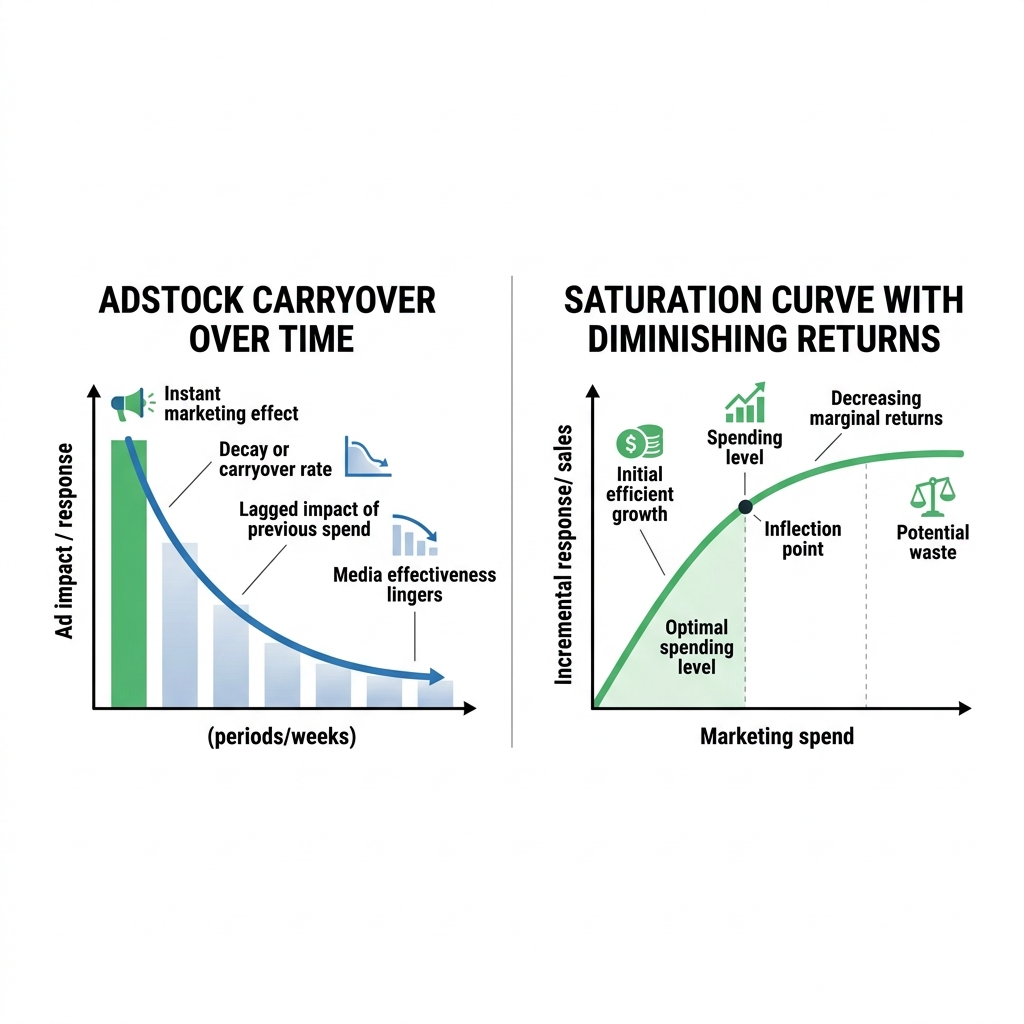
First, adstock accounts for carryover effects. This acknowledges that a consumer might see a video ad today but not complete a purchase until the following week. Typical adstock rates for video are 0.5 to 0.7, while search is often significantly lower at 0.2 to 0.4.
Second, saturation curves model diminishing returns. Every channel has an inflection point where spending more delivers progressively less value. A diminishing returns curve in marketing helps you identify when a channel like paid search is saturated. Research indicates that moving 20% of a budget from saturated channels to those with higher marginal ROI can boost incremental sales by 13% without increasing the total budget.
From decomposition to strategic decisions
Decomposing business value is not just a backward-looking exercise. For C-level executives, the true value lies in media budget scenario planning. By using model outputs, leadership can run what-if simulations to forecast the impact of budget cuts or shifts in the channel mix.
Modern mAI-driven models allow you to predict the impact of marketing activities and macro variables with over 90% accuracy. This capability is particularly vital as traditional tracking faces challenges from GDPR and privacy restrictions, which often cause platform-reported metrics to miss 30% to 60% of actual marketing impact. Organizations using these calculated insights frequently slash ad waste by up to 40% by identifying the specific drivers that move the needle.
If you are ready to stop guessing which drivers are fueling your growth, we can help you turn complex business data into clear, actionable budget decisions.
Get Marketing Analytics Insights
Monthly briefings on marketing mix modeling, budget optimisation and what's actually moving the needle for European brands.