How to cut media waste by 40% in a fragmented landscape
Analytical Alley Team
Marketing Analytics Experts

Are you losing track of your audience as they scatter across hundreds of platforms? Nielsen reports that streaming now commands 44.8% of TV viewing time, leaving traditional channels fragmented and B2...
Are you losing track of your audience as they scatter across hundreds of platforms? Nielsen reports that streaming now commands 44.8% of TV viewing time, leaving traditional channels fragmented and B2C marketing budgets highly vulnerable to double-counting and massive inefficiencies.
The fragmentation crisis: why traditional measurement fails
Audiences are no longer concentrated around a few dominant media outlets. Instead, they are highly dispersed across a rapidly expanding array of niche digital platforms, streaming services, and traditional channels. For instance, recent evidence from Nielsen indicates that traditional broadcast and cable programming accounted for 44.2% of television viewing time, while streaming services captured 44.8%.
This split creates immense friction for B2C brands. Fragmented media buying makes it exceptionally difficult to calculate true campaign reach, as audiences are counted multiple times across different platforms while frequency goes completely unmanaged. In fact, industry surveys show that 54% of advertisers cite media fragmentation as their top operational challenge.
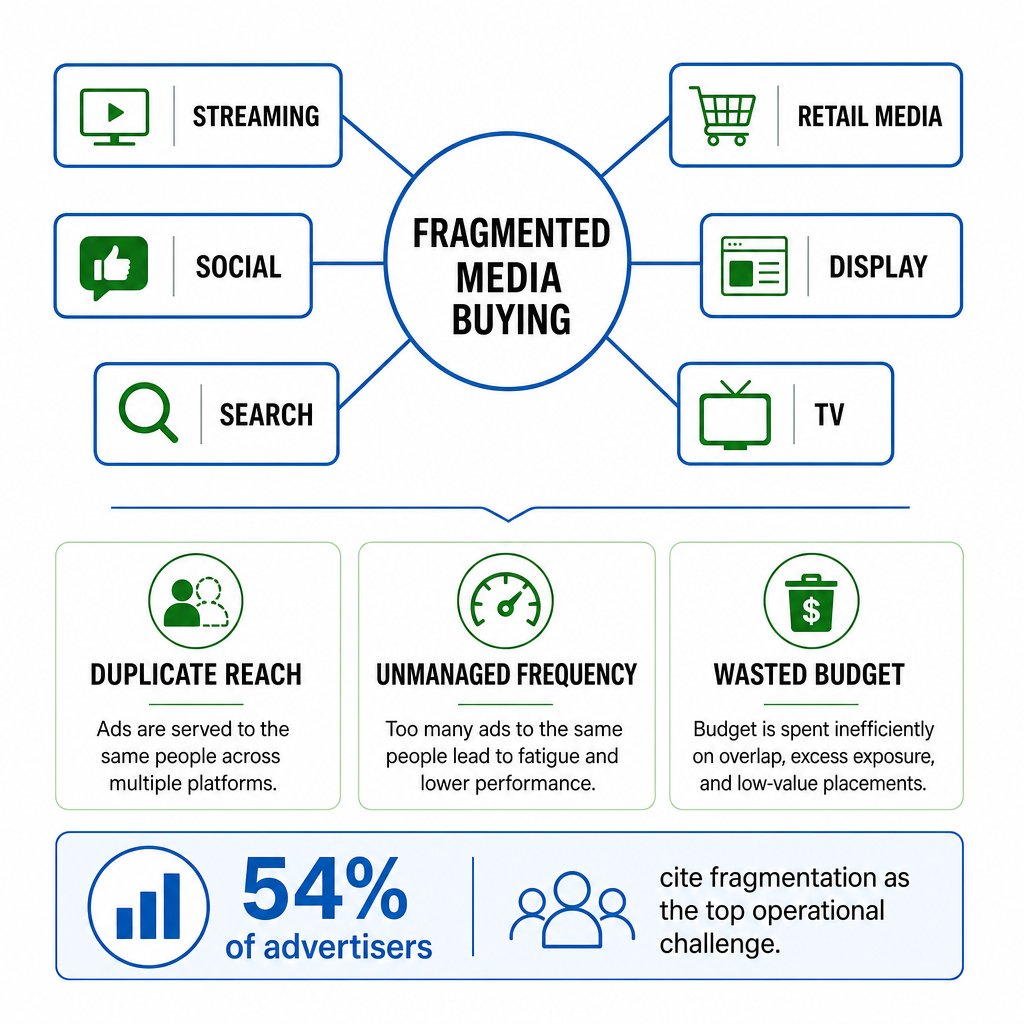
When you measure channels in isolation, you risk missing 30% to 60% of the actual marketing impact. To overcome this, regional marketing strategists and C-suite executives in Scandinavia, the Baltics, and broader Europe must move away from platform-specific attribution and adopt a holistic, unified measurement framework.
Solving fragmentation with modern econometric modeling
To overcome these blind spots, forward-looking B2C brands rely on sophisticated analytics to allocate capital. Implementing B2C marketing mix modeling (MMM) solves the fragmentation dilemma by applying advanced econometric methods to historical data. Rather than relying on tracking cookies or device identifiers, MMM isolates the true incremental impact of each media channel while controlling for external variables.
To make reliable decisions in a fragmented landscape, your econometric model must be modern and highly decision-ready. This requires:
The core of this econometric approach lies in multivariable regression modeling, which separates base sales from incremental lifts:
$$Sales = Base + sum beta_i (Channel_i) + sum gamma_j (Control_j) + epsilon$$
By calculating the unique $beta$ coefficients for each media touchpoint, brands can pinpoint exactly which platforms drive real business growth and which ones are simply consuming budget.
Capturing cross-channel synergies and diminishing returns
When audiences navigate multiple platforms, channels do not work in isolation. A streaming video campaign might not drive direct conversions, but it often creates a powerful halo effect that lifts the performance of paid search and social channels.
Through sophisticated cross-channel synergy analysis, econometrics identifies these interdependencies. Adding interaction terms to your regression model allows you to quantify the exact revenue lift generated when specific channels run simultaneously.
At the same time, brands must account for diminishing returns. Every media channel has a saturation point where additional investment yields lower marginal returns. Understanding these curves prevents over-indexing on a single platform and helps strategists identify the precise moment to reallocate budget to underutilized, high-performing alternatives.
Translating econometric insights into C-suite decisions
To secure executive alignment, econometric outputs must be translated into clear, strategic business intelligence. CFOs and CEOs need transparent, auditable methodologies and clear risk metrics rather than black-box algorithms.
Using advanced media budget scenario planning, leadership teams can run data-backed simulations to evaluate the impact of shifting investments before committing spend. This process allows organizations to:
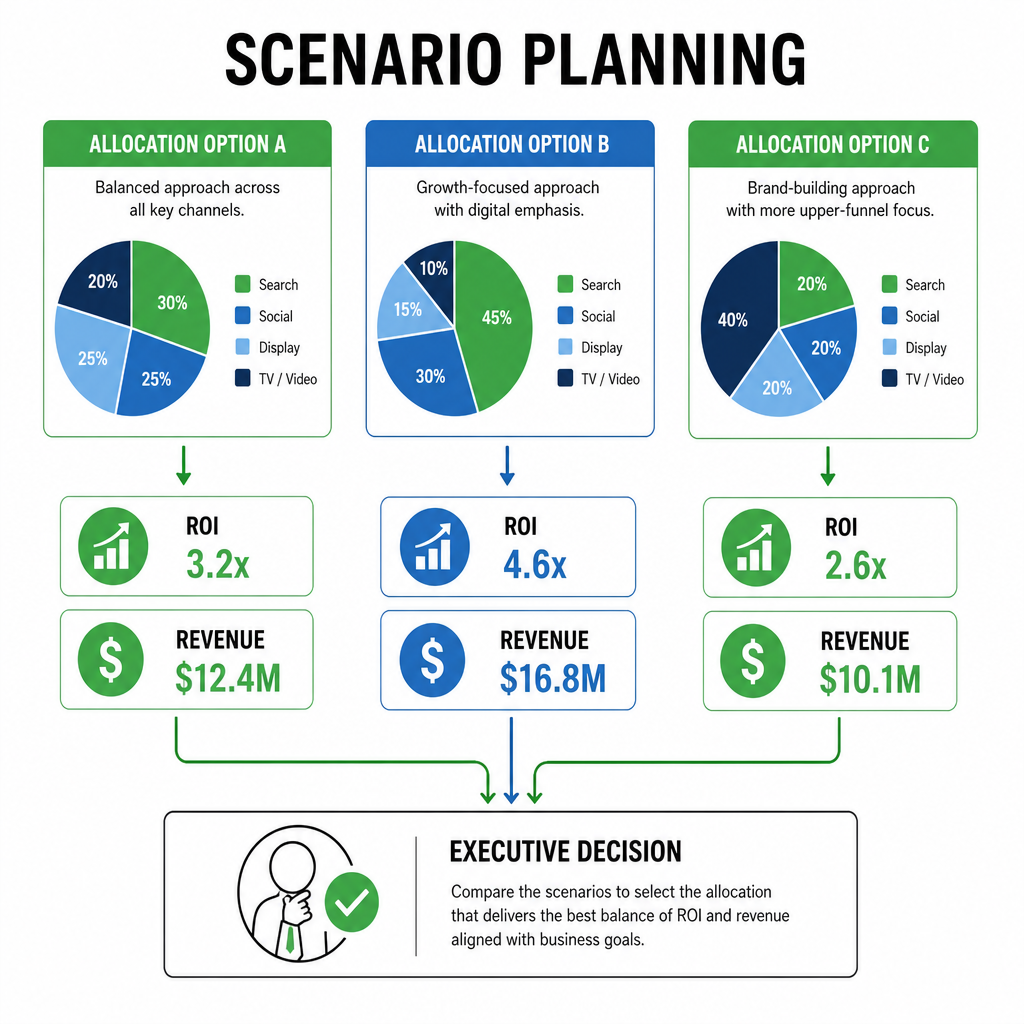
This structured approach makes it simple to optimize marketing spend and eliminate the waste associated with over-saturated channels.
Relying on fragmented data to solve media fragmentation only deepens measurement bias and inflates acquisition costs. B2C organizations across Europe require an objective, auditable, and highly accurate econometric framework to protect their operating margins.
Analytical Alley combines advanced computing power with human expertise to deliver media strategies with over 90% prediction accuracy. Our comprehensive models help brands eliminate budget waste by up to 40% through smart, calculated decisions.
To see how we can optimize your media mix, explore our specialized solutions for marketers and executives, or view our case studies to see our model in action. You can also book a demo with our team today to begin your optimization journey.
Get Marketing Analytics Insights
Monthly briefings on marketing mix modeling, budget optimisation and what's actually moving the needle for European brands.