Sweden 2026 inflation: how it impacts B2C media costs
Analytical Alley Team
Marketing Analytics Experts
Will Sweden’s projected 2.0% inflation rate stabilise your media performance or disrupt your margins? As the Riksbank targets price stability, B2C marketers must decode the econometric relationship be...
Will Sweden’s projected 2.0% inflation rate stabilise your media performance or disrupt your margins? As the Riksbank targets price stability, B2C marketers must decode the econometric relationship between macro trends and consumer demand to maintain high advertising effectiveness.
Projections for the Swedish economy in 2026
The Swedish economic landscape for 2026 is defined by a return toward the Riksbank target of 2.0% for CPIF inflation. According to OECD forecasts, inflation is expected to rise to 2.0% from a lower 1.3% in 2025. Conversely, the European Commission projects a temporary dip in headline CPI to a 0.6% average due to planned VAT reductions on food starting in April 2026, before rising back toward 1.6% in 2027.
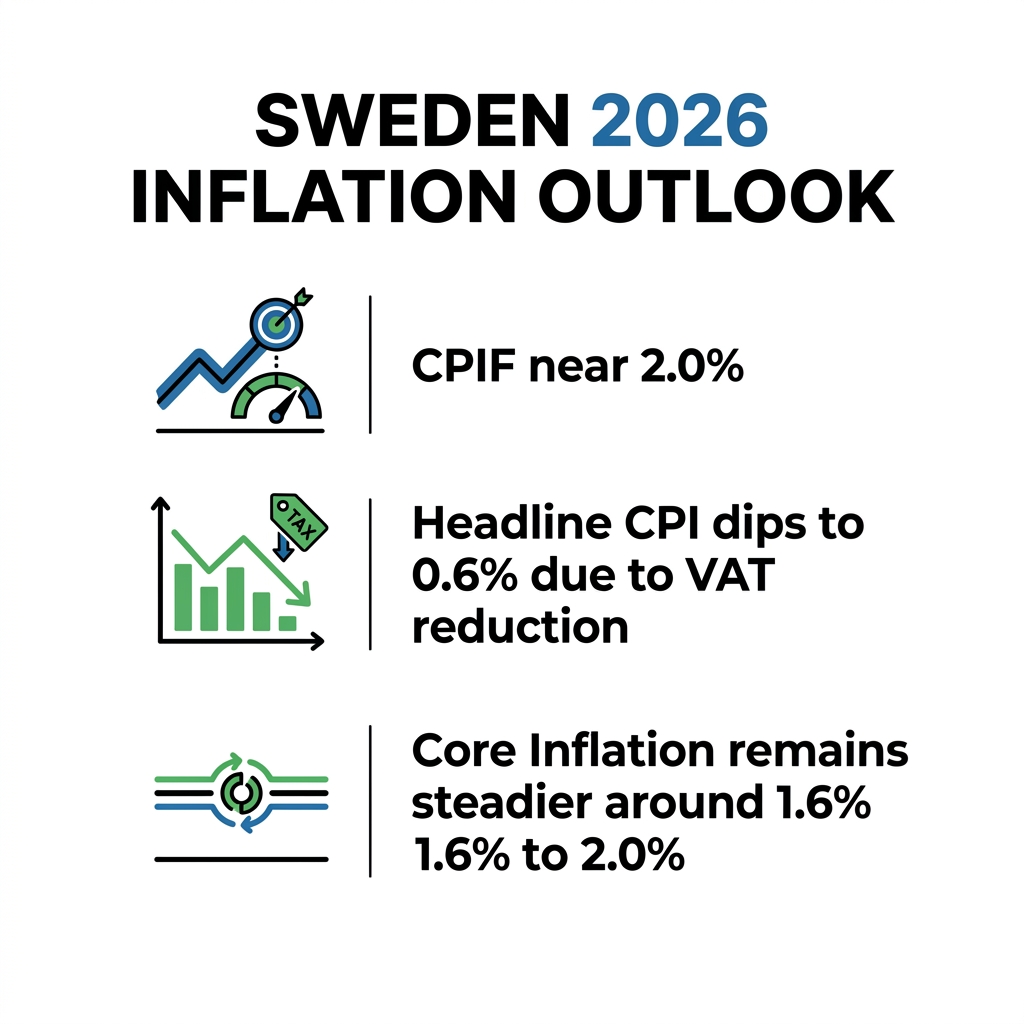
These fluctuations create a complex environment for B2C brands. While lower headline inflation might suggest a cooling of prices, core inflation excluding energy and food is expected to remain between 1.6% and 2.0%. For marketing strategists, this indicates that while operational costs may stabilise, the cost of reaching consumers will likely remain subject to volatility in the digital auction environment as GDP begins to pick up.
How inflation drives media cost volatility
Inflation does not just affect the price of goods: it fundamentally alters the cost and efficiency of media channels. In high-inflation periods, Cost Per Mille (CPM) and Cost Per Click (CPC) often experience significant spikes as brands compete for a shrinking pool of consumer disposable income. This was evident in 2025 benchmarks, where Swedish paid social CPMs averaged $11, though they remained highly sensitive to seasonal and economic shifts.
The transmission mechanism works through consumer confidence. In March 2026, Swedish consumer confidence was recorded at 95.2, indicating a cautious but recovering market as retail sales showed a 2.4% year-on-year increase. When confidence is low, category elasticity changes. Consumers often shift toward private labels or delay discretionary purchases, which forces brands to increase spend just to maintain baseline sales. Using econometric forecasting allows you to isolate these macro effects from your media performance, ensuring you do not misattribute a drop in ROI to poor creative when the primary cause is reduced purchasing power.
Measuring effectiveness amid shifting consumer behavior
Traditional attribution models often fail during periods of economic transition because they cannot account for external variables like inflation, VAT changes, or interest rate shifts. To understand the true impact of your spend, you must separate your baseline sales, which represent organic demand, from incremental sales driven specifically by marketing activities.
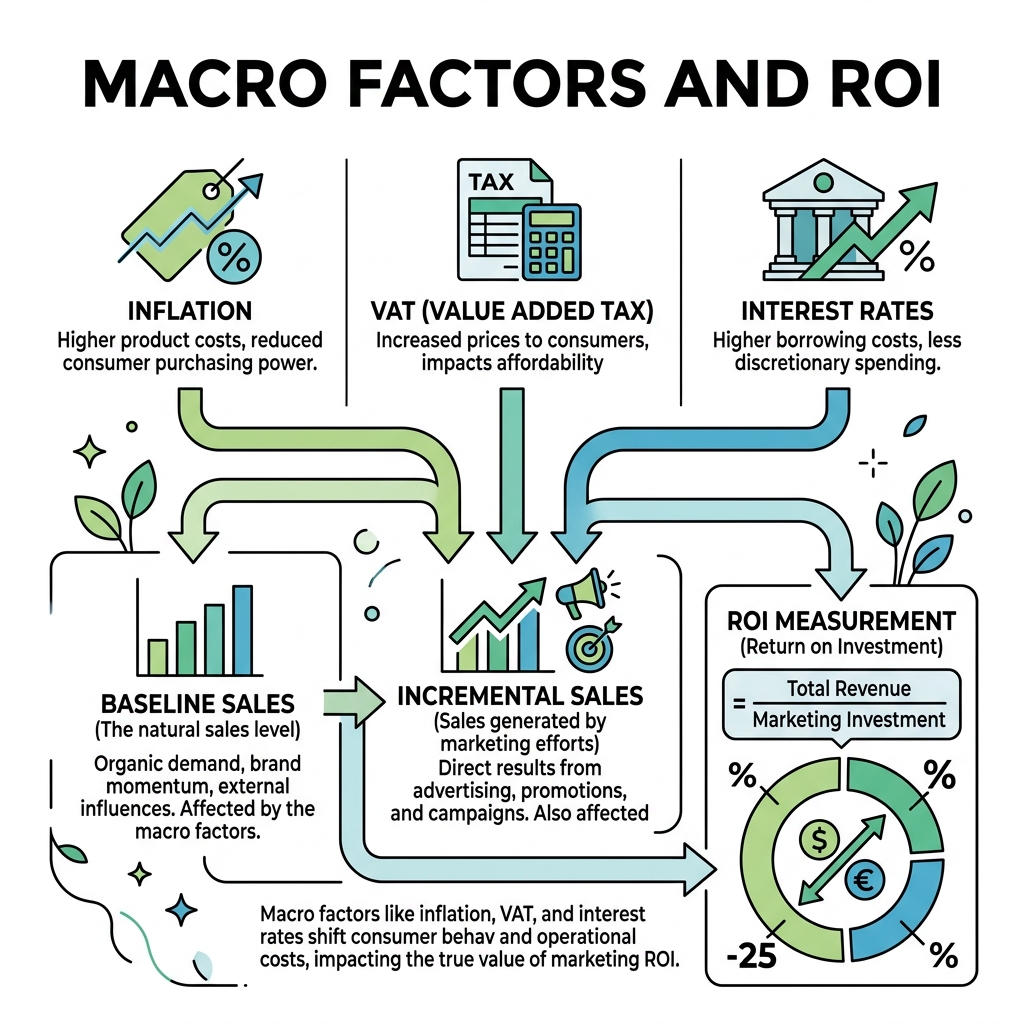
In the Swedish B2C sector, baseline sales typically account for 40% to 70% of total volume. Inflation can erode this baseline, making marketing spend appear less effective on paper if the model is too simplistic. Marketing mix modeling solves this by using multivariable regression to quantify how macro factors influence your results. A core metric in this analysis is the calculation of incremental return:
$ROI = frac{text{Incremental Revenue}}{text{Marketing Spend}}$
By factoring in inflation and consumer confidence as control variables, you can determine if your marketing spend optimization is actually working or if your brand is simply fighting an uphill battle against macroeconomic headwinds.
Optimising the 2026 media mix
As Sweden moves through 2026, media buyers should focus on channels that offer the highest marginal return rather than just looking at average performance. While digital auction costs fluctuate, certain econometric strategies can help protect your margins.
Navigating the road ahead
The 2026 inflation projections for Sweden suggest a period of relative stabilisation, but the underlying volatility in consumer behaviour requires a disciplined, data-driven approach. Relying on platform-reported metrics alone can lead to significant ad waste, as these tools often ignore the broader economic context and the impact of VAT reductions on consumer behavior.
By integrating macroeconomic variables into your measurement framework, you can make informed decisions that protect your margins and drive sustainable growth. To see how mAI-driven modeling can help you navigate these shifts with over 90% accuracy, explore our solutions for marketers and executives.
Get Marketing Analytics Insights
Monthly briefings on marketing mix modeling, budget optimisation and what's actually moving the needle for European brands.