How often to update your marketing mix model to stop waste
Analytical Alley Team
Marketing Analytics Experts
Are you wasting your advertising budget on saturated channels by relying on outdated reporting? In fast-moving B2C markets, relying on static econometric insights causes you to miss critical optimisat...
Are you wasting your advertising budget on saturated channels by relying on outdated reporting? In fast-moving B2C markets, relying on static econometric insights causes you to miss critical optimisation windows while ad waste accumulates.
The cost of static marketing mix modeling
Traditional marketing mix modeling historically operated as an annual retrospective exercise. Organisations received static reports months after their campaigns ended, rendering the insights virtually useless for active budget steering. In today's dynamic B2C environment, static models lose their practical value, sometimes rather quickly. Consumer behaviour can shift rapidly, competitors launch aggressive promotions, and macroeconomic conditions fluctuate.
Relying on outdated models leads to misallocated budgets and missed revenue opportunities. If your organisation only updates its model annually, you risk running campaigns that have already hit severe inefficiency. To drive continuous growth, you must transition from retrospective analysis to an active decision-making system. This requires aligning your modeling cycle with your actual business planning timelines.
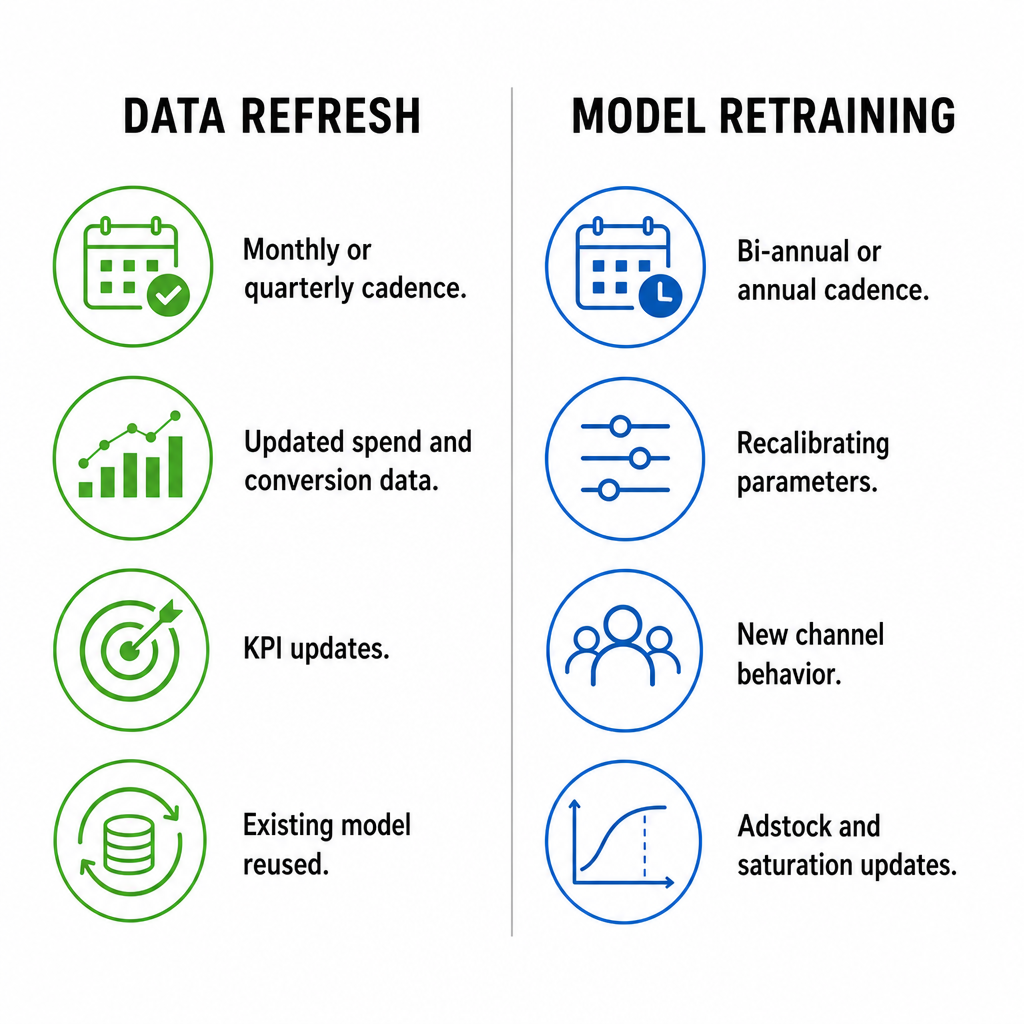
Defining your update cadence: data refresh vs. model retraining
A common point of confusion for executives and marketers is the difference between refreshing data and retraining the econometric model. To run an efficient process without overfitting your model to short-term noise, you must distinguish between these tasks:
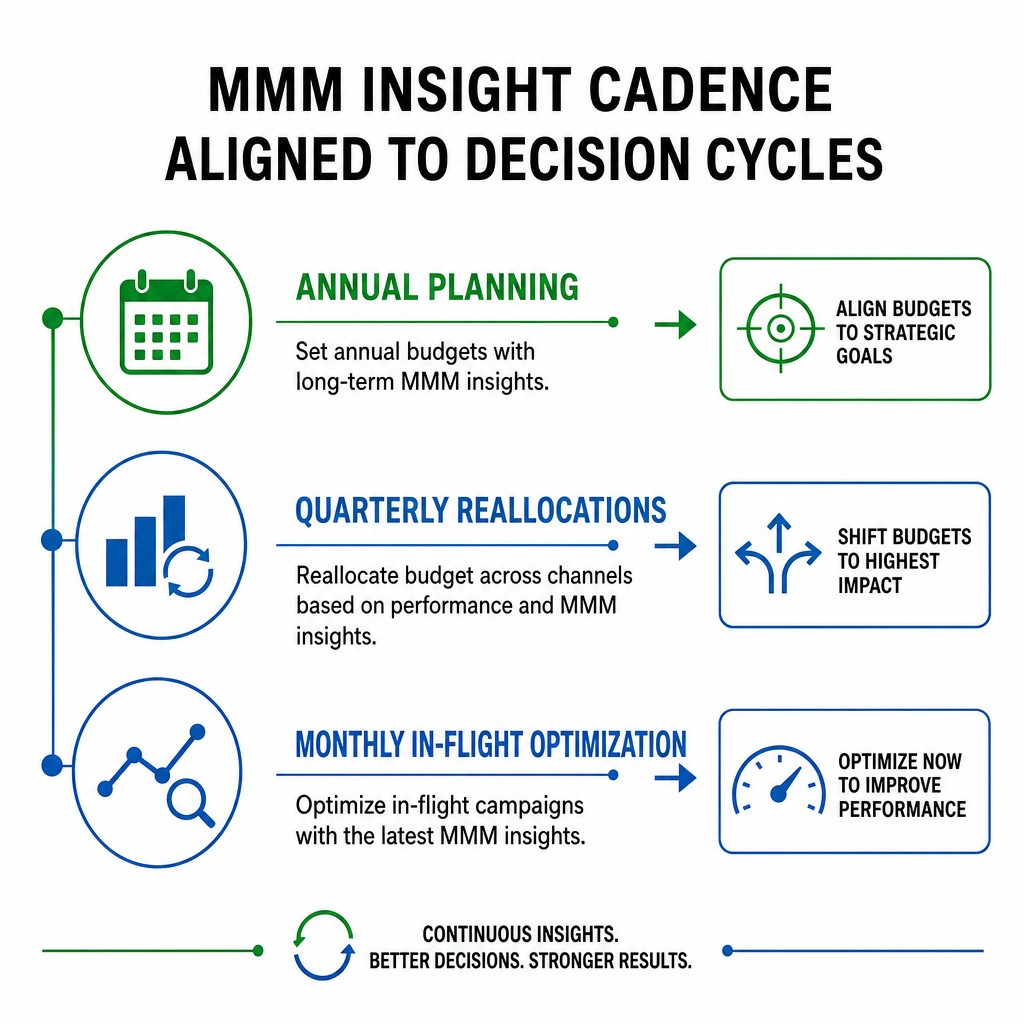
Aligning MMM with B2C decision-making cycles
The optimal operational cadence matches the frequency of your marketing decisions. Different roles within a B2C organisation require different insight cadences to achieve comprehensive marketing spend optimization.
Factors that determine your optimal cadence
While a monthly or quarterly refresh is the standard recommendation for modern B2C brands, your specific frequency depends on several core business variables:
Establishing a continuous operational cadence transforms econometric insights from a backward-looking report into a predictive engine for growth. By matching your refresh cycle to your business decision intervals, you can actively reduce waste and maximise returns.
To start making smarter budget decisions, marketers can leverage specialised tools for tactical allocation through our solutions for marketers page. C-suite leaders can access high-level forecasting and risk dashboards on our solutions for executives page to secure competitive advantages across Europe.
Get Marketing Analytics Insights
Monthly briefings on marketing mix modeling, budget optimisation and what's actually moving the needle for European brands.