Prove B2C ad performance with econometric verifiability
Analytical Alley Team
Marketing Analytics Experts

Is your board questioning your marketing budget because of whatever reason? Applying econometric verifiability to your advertising performance claims is the only way to isolate true incremental growth...
Is your board questioning your marketing budget because of whatever reason? Applying econometric verifiability to your advertising performance claims is the only way to isolate true incremental growth and confidently secure your B2C media investments.
Key takeaways
The danger of unverified marketing data
For B2C brands, relying on selfattributed platform ROAS often creates an illusion of success. Most ad platforms use overly generous attribution windows that capture organic conversions that would have occurred anyway. In reality, baseline sales typically account for 40% to 70% of total sales.
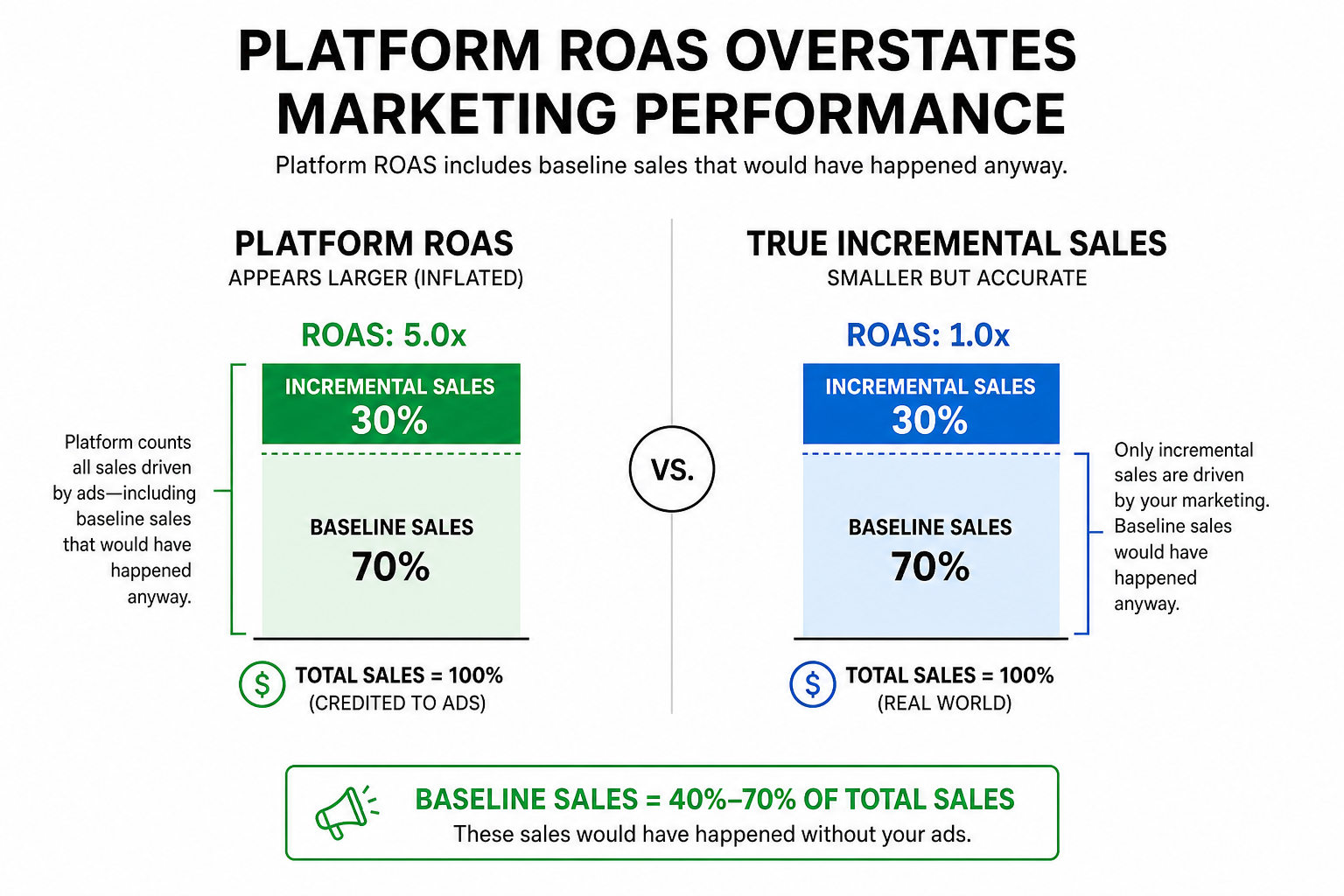
When you evaluate your budget through biased metrics, you overinvest into channels that simply touch the consumer last rather than those driving real growth. Distinguishing between incremental ROI vs platform ROAS is crucial first step to stop advertising budget being wasted. True marketing effectiveness must isolate the incremental contribution of media rather than attributing all observed outcomes to marketing activity.
Building a modern econometric verification framework
To establish statistical rigor, modern marketing organizations are moving away from outdated attribution models toward advanced econometrics. We do not need to get lost in the endless debate between Frequentist and Bayesian modeling; the true value lies in the validation and accuracy of your chosen framework.
A robust verification strategy uses multiple validation layers:
By comparing econometrics vs attribution side-by-side, you can build a comprehensive understanding of your true incremental impact.
Operationalizing rigorous measurement
To transition your team to a culture of verifiability, you must establish a continuous measurement loop. Start by auditing your data quality and ensure that you have at least 18 months of daily or weekly data.
Next, combine your strategic models with tactical validation. Use a hybrid architecture where you set high-level budgets with econometrics, and validate specific channels by triangulating MMM with lift testing. Finally, convert your mathematical insights into clear directives, like shifting budgets from low-performing channels to high-incrementality options.
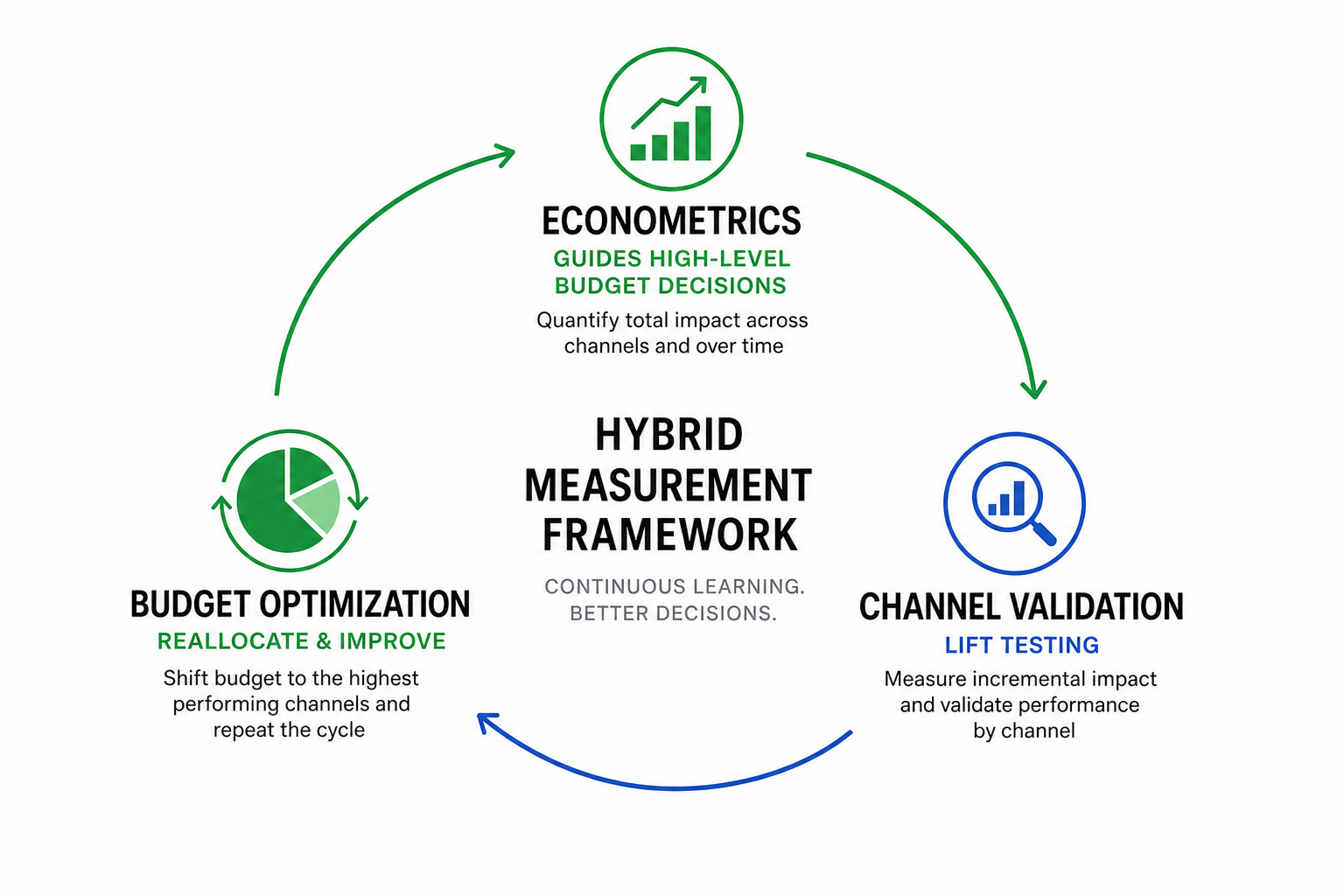
By using robust metrics to measure advertising effectiveness, you can systematically eliminate up to 40% of your ad waste.
Secure your marketing budget with confidence
Statistical rigor is the difference between guessing your marketing impact and proving it. By moving away from superficial platform metrics and adopting verifiable econometric modeling, you gain absolute clarity over which channels truly drive revenue.
Analytical Alley unifies your fragmented marketing, sales, and macroeconomic data into a single pane of glass. Our transparent, AI-driven econometric models provide marketing performance solutions that deliver over 90% predictive accuracy. Equip your team with auditable, board-ready reporting to make confident budget decisions that satisfy both the CMO and the CFO.
Ready to see how verifiable data can transform your marketing ROI? Book a Demo with Analytical Alley today.
Get Marketing Analytics Insights
Monthly briefings on marketing mix modeling, budget optimisation and what's actually moving the needle for European brands.