How media triangulation eliminates advertising waste
Analytical Alley Team
Marketing Analytics Experts
Are you certain your marketing channels are getting the credit they actually deserve? In a privacy-first landscape where platform-level data is increasingly compromised, relying on a single tracking t...
Are you certain your marketing channels are getting the credit they actually deserve? In a privacy-first landscape where platform-level data is increasingly compromised, relying on a single tracking tool often leads to wasted budget and misallocated resources.
The problem with single-source measurement
Relying on a single measurement tool is a common pitfall that indicates low marketing data maturity. Traditional, platform-based attribution models are failing because of privacy regulations like GDPR, iOS ATT, and the ongoing deprecation of third-party cookies. These industry shifts have reduced platform-level tracking coverage to roughly 40% to 70% in many European markets.
Furthermore, only 23% of European marketers holistically measure digital and traditional media spending together. When you measure B2C marketing channels in isolation, you miss 30% to 60% of the actual cross-channel impact. Triangulation solves this by building a unified measurement stack. Instead of relying on a single compromised data source, triangulation combines complementary methodologies to validate, clean, and verify your performance reporting.
The three pillars of media triangulation
To build an accurate, privacy-conscious measurement framework, you must combine three distinct approaches into a single cohesive strategy:
How triangulation creates a unified view
Triangulation is not just about running three isolated models; it is about connecting them in a continuous feedback loop. When these methodologies interact, they balance each other's inherent strengths and weaknesses.
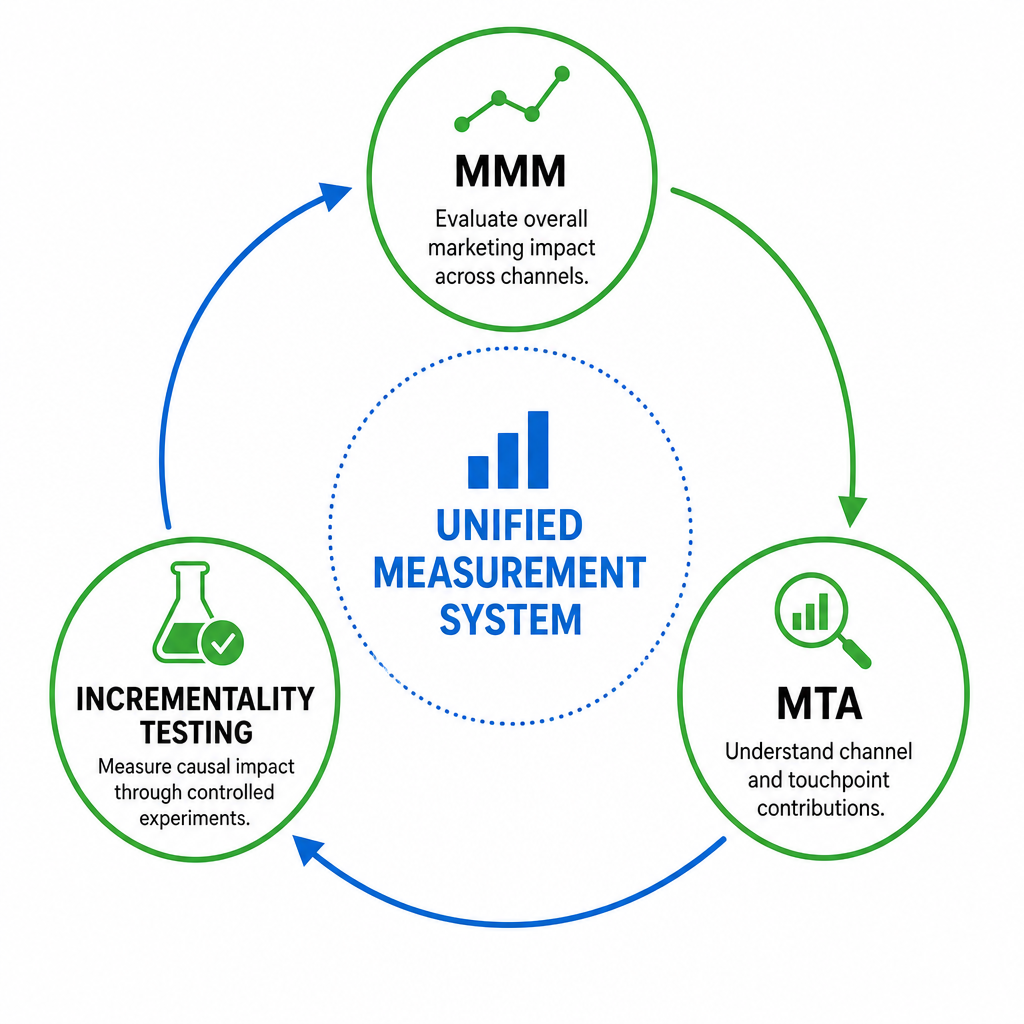
First, your macro-level MMM provides the strategic framework, allocating budgets across online and offline channels. Next, your tactical MTA tools optimise the daily and weekly spend within those digital channels.
Finally, periodic incrementality tests act as the calibration tool. The causal findings from your experiments are fed directly into your MMM regression models. This anchors your correlation-based data in real-world truth, reducing statistical noise and helping you avoid the classic mistake of over-investing in high-frequency, low-incrementality channels.
Strategic value for C-suite executives
For CEOs, CFOs, and CMOs, triangulation bridges the gap between marketing activities and actual business growth. Today's CMO must act as a natural integrator, working with fellow C-suite leaders to align marketing activities directly with the broader corporate growth agenda. Triangulation replaces platform-level vanity metrics with auditable, board-ready reporting that connects marketing activity directly to financial outcomes.
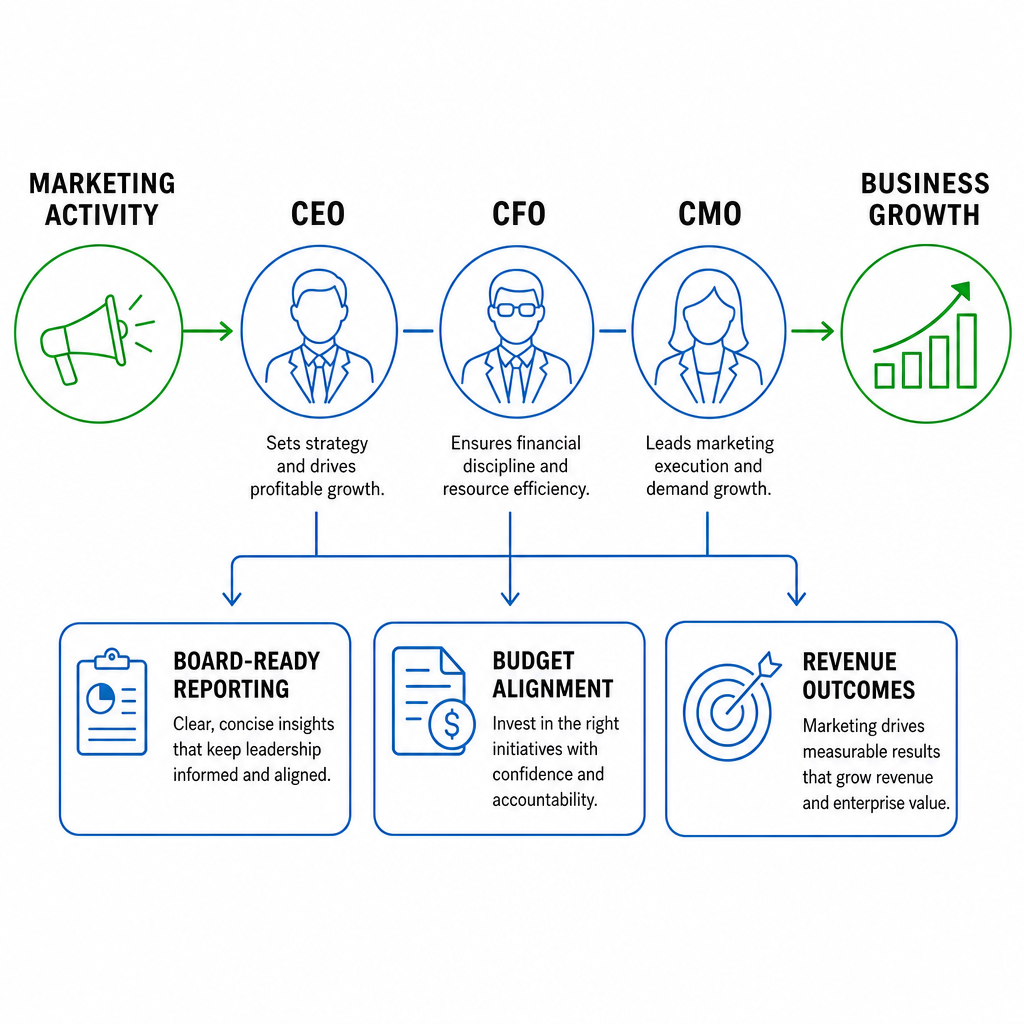
By unifying your media channels into a single framework, you can align marketing investments with broader corporate goals. This unified approach provides accurate, long-term metrics to measure advertising effectiveness, showing your financial stakeholders exactly how marketing spend converts into bottom-line revenue.
Achieve over 90% prediction accuracy
Implementing a sophisticated triangulation model does not require you to hire a massive team of data scientists.
At Analytical Alley, we offer specialised measurement solutions for marketers and executives that unify your marketing, sales, and external macro-signals into a single, highly accurate interface. Our mAI-driven media strategy combines advanced machine learning algorithms with expert econometric insight to predict the impact of your marketing decisions with over 90% accuracy.
Ready to eliminate measurement blind spots and scale your business profitably? Explore our knowledge hub to learn more, or book a demo with Analytical Alley today to see how we can help you slash ad waste by up to 40%.
Get Marketing Analytics Insights
Monthly briefings on marketing mix modeling, budget optimisation and what's actually moving the needle for European brands.