How to allocate your marketing budget with 90% accuracy
Analytical Alley Team
Marketing Analytics Experts

Are you wasting 40% of your ad spend on saturated channels? Most B2C brands struggle to see the true ROI of their media mix, but econometric modeling provides the clarity needed to optimize every euro...
Are you wasting 40% of your ad spend on saturated channels? Most B2C brands struggle to see the true ROI of their media mix, but econometric modeling provides the clarity needed to optimize every euro and achieve over 90% prediction accuracy.
Moving beyond last-click attribution
Standard platform metrics often provide a distorted view of your marketing performance. Relying on last-click data frequently favors lower-funnel channels while underfunding the top-funnel activities that drive long-term growth. To build a resilient strategy, you must shift focus toward incremental ROI vs platform ROAS to identify where your next euro of investment will actually generate new sales.
Econometric models allow you to strip away the noise of organic growth and external factors. In mature B2C categories, baseline demand typically accounts for 40% to 70% of total sales. By isolating this baseline, you can accurately measure the incremental contribution of each media channel. This approach ensures that you are not taking credit for sales that would have happened regardless of your advertising spend.
The mechanics of econometric allocation
A sophisticated budget allocation strategy accounts for how advertising effects linger and eventually fade. Econometrics uses two primary transformations to model this behaviour:
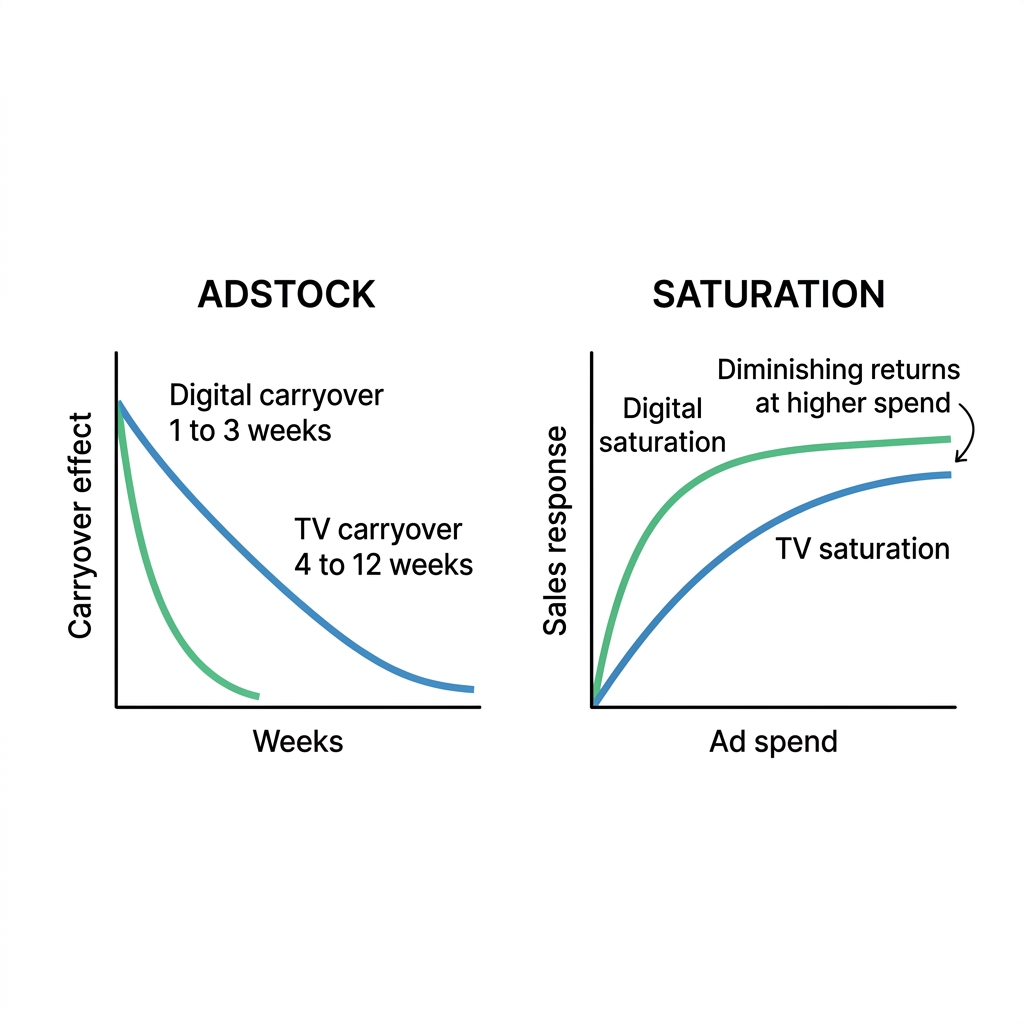
By understanding these curves, you can equalise marginal ROI across your entire portfolio. The goal is to invest in each channel up to the point where the next euro spent in Channel A delivers the same return as the next euro in Channel B. This prevents over-investment in saturated platforms like paid search while uncovering underfunded opportunities in awareness-driven channels.
Optimising the B2C media mix
Modern marketing mix modeling reveals that awareness channels like TV or YouTube often provide a halo effect, lifting the performance of lower-funnel digital channels by 15% to 40%. Ignoring these synergies leads to sub-optimal budget cuts that can cause a cascade of declining efficiency across your entire ecosystem.
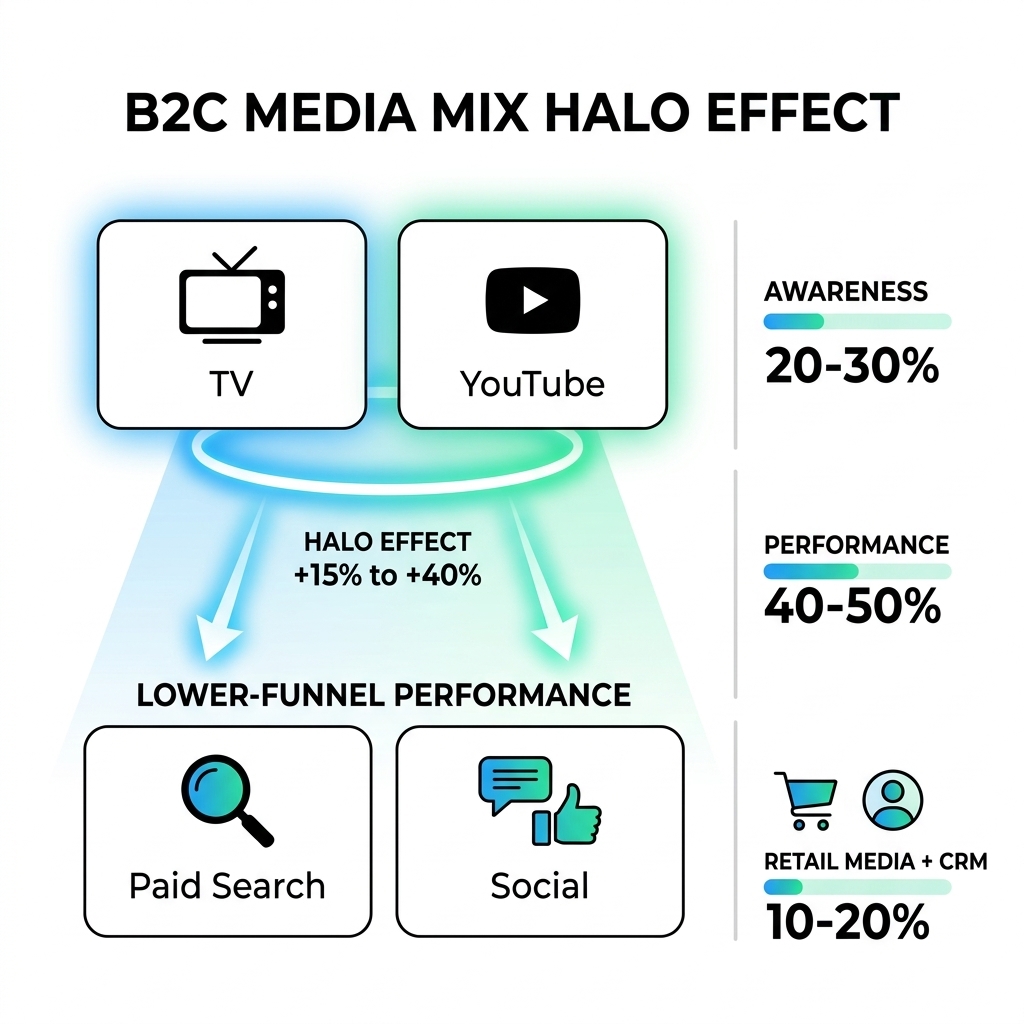
Successful B2C retailers typically follow established investment benchmarks to balance their portfolios:
These allocations should not remain static. You should treat your budget as a dynamic asset, utilising media budget scenario planning to simulate the impact of shifting funds between channels before committing spend. High-performing teams often phase reallocations in increments of 10% to 20% per quarter to validate model predictions against real-world results.
Implementing a data-driven framework
To begin optimising your investment, you need a robust foundation of historical data. Robust data requirements for econometrics generally involve 2 to 3 years of weekly spend data at the SKU or regional level, along with external variables like seasonality, competitor activity, and economic indicators.
Once your baseline is established, you can run simulations to forecast future outcomes. Analytical Alley’s mAI-driven media strategy can process millions of simulations to predict the impact of macro variables and media activities. This allows you to slash ad waste by up to 40% by identifying precisely where your budget is being underutilised.
Our solutions for marketers turn complex business data into clear, actionable budget decisions. We help you find the channels that truly drive results so you can invest with confidence and transparency.
Book a demo today to see how our econometric models can transform your marketing effectiveness.
Get Marketing Analytics Insights
Monthly briefings on marketing mix modeling, budget optimisation and what's actually moving the needle for European brands.